Spice
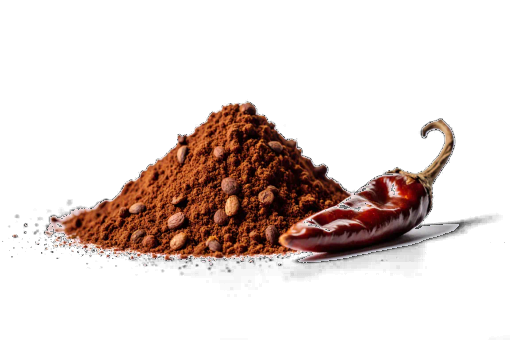
Merkén
Capsicum annuum (ají cacho de cabra)
Smoky and hot, with the fruity background of ripe cacho de cabra chili and the citrusy, warm touch of toasted coriander seed; the salt rounds it off and turns it into a table condiment.
Aroma compounds
The volatile molecules behind its aroma. Each one adds a distinct note.
- Guaiacol sweet, woody smoke, the first thing you notice when you open the jar
- 4-Methylguaiacol spicier, drier smoke that accompanies guaiacol
- Capsaicin the medium heat of the cacho de cabra chili
- Linalool floral and citrusy, from the toasted coriander seed
- Capsanthin red pigment of the ripe chili, responsible for the brick colour
In the kitchen
It is the Mapuche condiment par excellence: ripe cacho de cabra chili, dried and smoked, ground with toasted coriander seeds and salt. Proportions change from one producer to another, which is why one merkén can be saltier, smokier or hotter than the next. It is used as a finishing condiment, sprinkled over the plated dish, or at the start of the sofrito dissolved in oil, like ají de color. On this site it appears as an option in the garlic shrimp (camarones al ajillo), where it stands in for the dried cacho de cabra chili; it also goes well over boiled potatoes, in pebre, in meat marinades for the grill, in legume soups, in compound butters and even over fried eggs or avocado. Since it contains salt, season the dish after tasting it.
- Avocado
- Potato
- Pebre
- Shrimp
- Butter
- Fresh cheese
How to choose, store and substitute it
How to choose it
Prefer merkén from producers in La Araucanía or the south, with the ingredients declared (cacho de cabra chili, coriander seed and salt) and no added paprika or colourings. It should smell of smoke and chili, not only of salt, and have an irregular texture with visible bits of seed; a very fine, uniform powder is usually an industrial blend. The colour ranges from brick red to reddish brown; if it is bright red, it probably contains paprika.
How to store it
Airtight jar, away from light and humidity. It keeps its smoke and heat for about 6 months; after that the smoke fades first and a dull salted chili remains. Do not keep it in an open bag, because it absorbs moisture and cakes, and do not store it above the stove. If it hardens, crumble it with your fingers or in a mortar before using.
What to use instead
- Hot smoked paprika: the same amount, plus a pinch of ground coriander seed and less salt in the dish.
- Sweet smoked paprika with chili flakes: in equal parts up to the same amount; it gives the smoke and the heat separately.
- Dried cacho de cabra chili ground with salt: the same amount; the smoke is missing, so it works in stews where smokiness is not the point.
- Ground chipotle: half the amount, because it is hotter and its smoke is sweeter; good in meat marinades.
Frequently asked questions about merkén
What is merkén?
It is a traditional Mapuche condiment made from ripe cacho de cabra chili, dried and smoked, ground together with toasted coriander seeds and salt. It is smoky, hot and a little salty, and it is used as a table seasoning or in the sofrito. Proportions change depending on who makes it; that is why no two merkéns are alike.
Where does merkén come from?
From the Mapuche cooking of central and southern Chile, especially La Araucanía, where the cacho de cabra chili is hung to dry and smoked over the hearth before being ground on stone. Today it is produced both by hand and industrially and sold across the country, and it is one of the Chilean products best known outside Chile.
How hot is merkén?
Medium hot: less than a chile de árbol and more than hot paprika, because the cacho de cabra chili has moderate heat and the salt and coriander seed soften it. Since each producer uses a different proportion, taste a pinch before measuring; half a teaspoon is enough to season a pot of stew for four.
Can merkén replace ají de color?
Only in part. Both tint and perfume the oil, but merkén brings smoke, heat and salt that ají de color does not have. In a meat or legume stew it can stand in using half the amount and adjusting the salt at the end; in the classic pino of empanadas it changes the traditional flavour.
How do I use merkén in everyday cooking?
Sprinkled at the end over potatoes, eggs, avocado, soups or a cheese board, so the smoke is not lost to the heat; or at the start, dissolved in warm oil with garlic, as the base of a stew, a marinade for the grill or a compound butter. In pebre, half a teaspoon adds smoke without taking away its freshness.