Herb
Cilantro
Coriandrum sativum
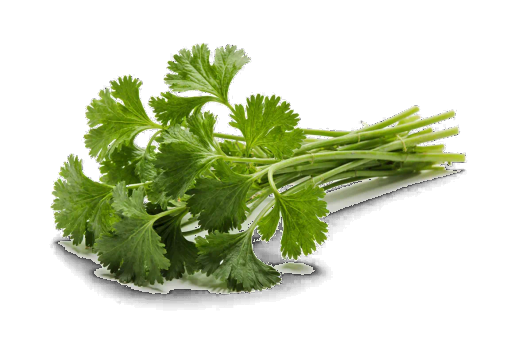
Green, fresh and citrusy aroma with a penetrating note that reminds some people of soap; the seed, by contrast, smells warm, sweet and of orange peel.
Aroma compounds
The volatile molecules behind its aroma. Each one adds a distinct note.
- (E)-2-Decenal the typical green, pungent note of the leaf; the one some people perceive as soap
- Linalool floral and fresh, with a citrusy touch
- Decanal citrusy and waxy, reminiscent of orange peel
- (E)-2-Dodecenal green, fatty and persistent, it gives the aroma body
- Dodecanal soft citrus and slightly floral
In the kitchen
It is the fresh herb of Chilean cooking: finely chopped in pebre and chancho en piedra, over the ensalada chilena of tomato and onion, on ajiaco as it is served and in ceviche de camarón, where its freshness balances the lime. It also goes into the salad dressing, the quinoa templada and tacos al pastor. It is always added at the end or raw, because heat destroys its aroma in minutes; over a hot stew it is sprinkled when serving. The tender stems have as much flavour as the leaves and are chopped with them. The seeds, coriander, are a different spice, warm and citrusy, used ground in marinades and in some breads.
- Lemon
- Tomato
- Onion
- Green chili
- Avocado
- Cumin
How to choose, store and substitute it
How to choose it
Choose bunches with green, broad, firm leaves, stiff stems and no yellow or slimy parts. It should smell strong when brushed. Avoid plants with flowers or seeds, which point to an old plant with bitter leaves. If you can get it with the root, better: it lasts longer, and the root, very aromatic, is used in sofritos and broths as in Thai cooking.
How to store it
Wash it only just before using it. In the fridge it keeps 5 to 7 days standing in a glass with an inch of water, covered with a bag, or wrapped in barely damp paper towel inside a container. Chopped, it darkens within hours, so it is cut at the last moment. To keep it for months, chop it and freeze it with oil in an ice-cube tray; it is not dried, because drying takes away all its aroma.
What to use instead
- Flat-leaf parsley: the same amount; it gives the colour and the freshness, but not the citrus note.
- Parsley with lemon zest: the same amount of parsley plus a little zest, the closest in flavour.
- Fresh basil: the same amount in salads and cold sauces, with a sweeter, anise-like result.
- Celery leaves: the same amount, very finely chopped, in pebre and salads, with a milder green taste.
Frequently asked questions about cilantro
What is cilantro?
It is an annual herb of the parsley family, Coriandrum sativum, whose fresh leaves are used as cilantro and whose dried seeds are a separate spice, coriander. It is native to the Mediterranean and western Asia, and in the Americas it became the fresh herb of salsas and salads. In Chile it is essential in pebre, ensalada chilena and ceviche.
Why does cilantro taste like soap to some people?
Because of the aldehydes in the leaf, especially (E)-2-decenal, compounds similar to those formed in soaps and cleaning products. A genetic variant in the smell receptors makes part of the population perceive them more strongly and associate them with soap. It is not a flaw in the herb or the recipe; chopping it very finely and mixing it with lemon and oil softens that note.
Are cilantro leaves and coriander seeds the same thing?
They come from the same plant, but they are two different ingredients. The leaves, cilantro, are green, fresh and citrusy, and are eaten raw or barely warmed. The seeds, coriander, are round, light brown, with a warm, sweet aroma of orange peel, and are used ground in marinades, breads and curries. They do not replace each other within a recipe.
When should cilantro be added so it keeps its flavour?
At the end, always. Its aroma depends on volatile compounds that evaporate with heat in a few minutes, so over a hot stew or broth it is sprinkled when serving, and in cold sauces such as pebre or ceviche it is mixed in at the last moment or a few minutes before. The tender stems have as much flavour as the leaves and are chopped with them.
How do you keep cilantro fresh for longer?
Treat it like a bunch of flowers: trim the base of the stems, stand it in a glass with a little water, cover the leaves loosely with a bag and keep it in the fridge, changing the water every two days. It lasts a week that way. Do not wash it until you use it, because moisture rots it, and never keep it chopped from one day to the next.
Recipes with cilantro
- Salad Dressing — Classic Vinaigrette and 5 Easy Variations
- Shrimp Ceviche — Fresh Lime, Red Onion and Cilantro
- Chancho en piedra — Chile's stone-ground tomato, garlic and chili salsa
- Chilean Salad (Ensalada Chilena) — Tomato and Onion Salad
- Chilean pebre (fresh tomato, onion & cilantro salsa)
- Warm quinoa bowl
- Al pastor tacos