Dairy
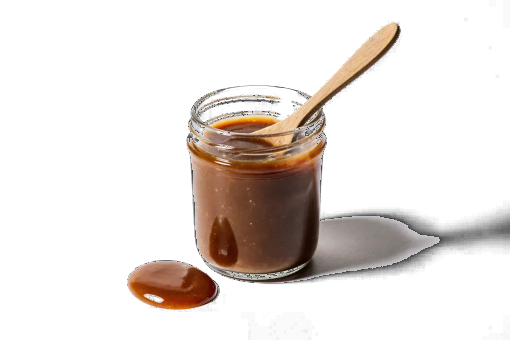
Manjar (Chilean dulce de leche)
Caramelised milk: dense sweetness with notes of caramel, cooked butter and vanilla, a toasted base of reduced milk and a slight dairy acidity that keeps it from cloying.
Aroma compounds
The volatile molecules behind its aroma. Each one adds a distinct note.
- Maltol caramel and candy floss, the baked sweetness of manjar
- Furaneol cooked caramel and fruit, formed as the milk concentrates with the sugar
- Diacetyl butter and cream, the dairy character
- 2,5-Dimethylpyrazine toasted and nutty, from the reaction between lactose and milk proteins
- Butanoic acid in traces, the sour, cheesy note that reminds you it is milk
In the kitchen
Manjar is milk and sugar simmered for hours until the water evaporates and the sugars and milk proteins caramelise, with a little bicarbonate of soda that deepens the colour and keeps it from curdling, and sometimes vanilla. It is Chile's dulce de leche, and home cooking knows two versions: spreading manjar, softer, for bread, pancakes and cakes, and pastry manjar (manjar pastelero), thicker and firmer, which holds its shape when used as a filling. It is the filling of Chilean hojarasca alfajores, spread in pairs between two thin layers and finished with icing sugar, and on this site it appears in that recipe. It also fills brazo de reina, torta de mil hojas, cuchuflíes, berlines and chilenitos, tops the panqueque celestino and goes with ice cream. It is used cold or at room temperature; warmed it turns liquid and thickens again as it cools, which helps to smooth it or turn it into a sauce.
- Hojarasca pastry
- Desiccated coconut
- Walnuts
- Banana
- Meringue
- Coffee
How to choose, store and substitute it
How to choose it
For filling alfajores choose pastry or confectioner's manjar, the kind sold thick that does not slide when the tub is tilted; the spreading kind is softer and oozes out of the edges. Read the ingredients: the best contain only milk, sugar, bicarbonate and vanilla, with no starches, vegetable fats or glucose syrup as the first ingredient. The colour should be an even medium brown, the texture smooth and glossy, with no grains of crystallised sugar. A 400 g tub fills about 20 standard-sized alfajores.
How to store it
Unopened, in the pantry, it keeps until the date on the tub, usually several months, because the sugar preserves it. Once opened, in the fridge, it keeps 3 to 4 weeks well covered; if liquid appears on the surface, just stir it in. If it hardens or crystallises in the cold, take it out an hour ahead or warm it for a few seconds over a water bath. Homemade manjar, with less sugar than the industrial kind, lasts about 2 weeks chilled. Filled alfajores keep at room temperature in an airtight tin for 5 to 7 days.
What to use instead
- Argentine or Uruguayan dulce de leche: the same amount; it is usually softer, so for alfajores use the confectioner's grade or reduce it for a few minutes on the stove.
- Colombian arequipe: the same amount; very similar, just a little paler and sweeter.
- Mexican cajeta: the same amount; made with goat's milk, it brings a more intense, slightly tangy flavour.
- Cooked condensed milk: an unopened tin, covered with water and boiled for 2 to 3 hours, gives the same weight of a thick, sweeter manjar.
Frequently asked questions about manjar (chilean dulce de leche)
What is manjar?
It is Chilean dulce de leche: milk and sugar simmered for hours with a pinch of bicarbonate and sometimes vanilla, until it thickens and takes on a caramel colour through the caramelisation of the sugars and the reaction between lactose and proteins. It is the quintessential filling of Chilean baking, from hojarasca alfajores to brazo de reina and torta de mil hojas, and it is sold in tubs as spreading manjar or pastry manjar.
Are manjar, dulce de leche and arequipe the same thing?
They are the same sweet under different names depending on the country: manjar in Chile, dulce de leche in Argentina and Uruguay, arequipe in Colombia, cajeta in Mexico when it is made with goat's milk. Small details of texture, colour and sweetness change with each place's recipe and industry: the Chilean kind tends to be somewhat firmer and less sweet than Argentine spreading dulce de leche. In any recipe they replace each other one for one.
How do I thicken manjar for filling alfajores?
The simplest route is to buy pastry manjar, which already comes firm. If only the spreading kind is available, cook it over low heat in a heavy-bottomed pan, stirring constantly, for 5 to 10 minutes until the spoon leaves a trail showing the bottom of the pan, and let it cool completely before using it, because it thickens as it cools. Another option is to mix in one or two tablespoons of desiccated coconut or of cooked cornflour. Alfajores are filled with cold manjar.
Can manjar be made from condensed milk?
Yes: the sealed, unopened tin is fully covered with water in a pot and boiled for 2 to 3 hours, topping up with hot water so it is never exposed, and left to cool completely before opening. The result is a thick, fairly sweet manjar, very handy for filling alfajores. It can also be done in the oven, in a dish with the condensed milk covered with foil in a water bath, about 2 hours at 200 °C, stirring halfway through.
How long does manjar keep once opened?
In the fridge, well covered, 3 to 4 weeks; the sugar protects it, but once opened, moisture and used spoons can contaminate it, so always serve it with a clean utensil. The homemade kind, with less sugar, lasts about 2 weeks. If it hardens in the cold, take it out an hour before using it or warm it for a few seconds over a water bath; if mould appears or it smells sour, throw it away.