Spice
Vanilla
Vanilla planifolia
A sweet, enveloping aroma — warm and creamy, with a balsamic backbone and subtle woody, floral nuances.
Aroma compounds
The volatile molecules behind its aroma. Each one adds a distinct note.
- Vanillin sweet, creamy, quintessential vanilla — the heart of the aroma
- Guaiacol smoky and phenolic, with a woody edge
- Acetovanillone sweet and balsamic; extends the vanilla note
- 4-Vinylguaiacol spicy, clove-like, faintly smoky
- 2-Phenylethanol floral, rose- and honey-like
In the kitchen
It flavours desserts, creams, ice cream, custards and baking, using the split pod in infusion, the scraped seeds or the extract and paste. It also lifts sauces, coffees and drinks. In Chilean cooking it perfumes leche asada, rice pudding, flans and small cakes, and accompanies cinnamon in cola de mono and pan de pascua. The pod is infused in the hot liquid; the extract goes in at the end, so heat does not evaporate its aroma.
- Chocolate
- Coffee
- Strawberries
- Banana
- Caramel
- Rum
How to choose, store and substitute it
How to choose it
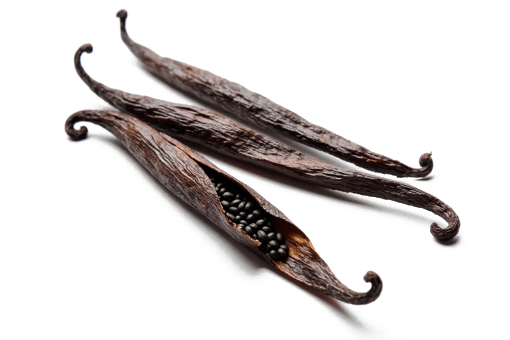
A good pod is thick, flexible and slightly oily, dark brown almost black, with an intense aroma, and may show fine crystals of vanillin; if it is dry, brittle and odourless, it is old. In extract, look for the label "pure vanilla extract": cheap "vanilla essence" is usually synthetic vanillin, with a flatter flavour and no floral notes.
How to store it
Keep pods in an airtight glass tube or jar, in a cool, dark place, not in the fridge, where they dry out and take on moisture: they last 1 to 2 years. Pure extract, in its dark, well-closed bottle, keeps for years in the pantry. Used pods are washed, dried completely and kept in a jar with sugar, which becomes vanilla sugar.
What to use instead
- 1 pod equals 1 tablespoon (15 ml) of pure extract or vanilla paste.
- Vanilla essence (vanillin): the same amount as extract; the aroma is flatter, without floral notes.
- Orange or lemon zest with a pinch of cinnamon: they add a warm perfume to a dessert when there is no vanilla, although they do not replace it.
Frequently asked questions about vanilla
How do you scrape the seeds from a vanilla pod?
Lay the pod on the board, split it lengthwise with the tip of a sharp knife, without cutting through, and scrape the inside with the back of the knife: hundreds of black seeds come out. Use them in the cream or dough and drop the empty pod into the hot milk as well: it still holds a lot of perfume.
Extract, paste or essence?
Pure extract (vanilla in alcohol) is the most practical and versatile for doughs and desserts. Paste includes seeds and shows in creams and ice cream. Commercial essence is usually synthetic vanillin: cheaper, with a flatter flavour. For a dessert where vanilla is the star, the pod or pure extract is worth it.
What do I do with the used pod?
Wash it, dry it completely in the air and keep it in a jar with sugar: within a week you will have vanilla sugar for baking and coffee. It can also be left in a bottle with rum or brandy to make homemade extract, which takes about 2 months to mature.
Why is vanilla so expensive?
The vanilla orchid is pollinated by hand, each flower opens for a single day and the pods are cured for months before sale. That manual work and the difficulty of cultivation explain the price; that is why one pod serves several recipes and is worth using whole.
Recipes with vanilla
- Horchata (Mexican Rice and Cinnamon Drink)
- Arroz con leche (Latin American rice pudding with cinnamon)
- Chilean cola de mono — the creamy Christmas drink with coffee and cinnamon
- Homemade butter cookies
- Funfetti sprinkle cookies
- Chocolate cookies
- Leche asada (Chilean baked milk custard) — caramel-bottomed custard with a golden skin
- Homemade manjar (Chilean dulce de leche)
- Chilean pan de pascua — Christmas fruit loaf with candied fruit, walnuts and ginger
- Chocolate Loaf Cake (Panqué de Chocolate)
- Gorgeous Greek yoghurt & berry pots