Spice
Cinnamon
Cinnamomum verum
A warm, sweet aroma built on an unmistakable spicy core, with clove-like nuances and a woody, faintly floral undertone.
Aroma compounds
The volatile molecules behind its aroma. Each one adds a distinct note.
- Cinnamaldehyde warm, sweet and spicy; the unmistakable signature of cinnamon
- Eugenol clove-like, warm and slightly medicinal
- Cinnamyl acetate sweet, balsamic and floral-fruity
- Linalool floral and fresh, with a citrusy touch
- beta-Caryophyllene woody, dry and slightly peppery
In the kitchen
It is used in baking, rice puddings, compotes and hot drinks such as punch or mulled wine, either as a stick for infusing or ground. It also adds depth to savoury stews, curries and tagines. In Chilean cooking it perfumes rice pudding, the syrup of mote con huesillo, sopaipillas pasadas, apple kuchen, cola de mono and pan de pascua. The stick is infused at the start and removed; ground cinnamon is mixed in with the flour or dusted on at the end.
- Apple
- Chocolate
- Coffee
- Vanilla
- Orange
- Honey
How to choose, store and substitute it
How to choose it
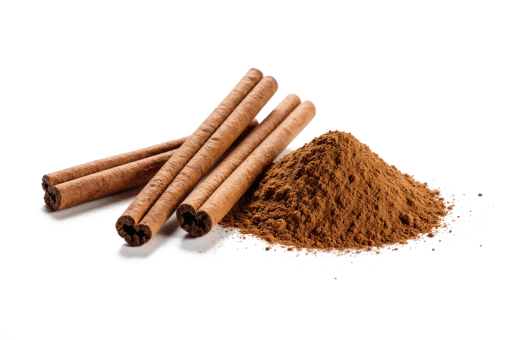
For infusions and syrups choose whole, fragrant sticks that are not broken. Ceylon cinnamon (the "true" one) rolls up in many thin layers, is light brown and crumbles easily; cassia, more common and cheaper, is a thick single-roll bark, darker and stronger. If you buy it ground, the aroma should be intense when you open the jar: the best is to grind a stick just before using it.
How to store it
Keep it in an airtight jar, away from light, heat and humidity, like any spice. Sticks keep their aroma for 2 to 3 years; ground cinnamon loses it faster, in 6 to 12 months. To check, rub a pinch between your fingers: if the aroma is weak, it is not worth using in desserts, where it is the star.
What to use instead
- Allspice: the same amount; it is spicier and less sweet.
- Nutmeg: a quarter of the amount, because it is much more intense.
- Stick for ground: a stick of about 8 cm equals between 1/2 and 1 teaspoon ground, depending on thickness.
Frequently asked questions about cinnamon
What is the difference between Ceylon cinnamon and cassia?
Ceylon (Cinnamomum verum) is delicate, sweet and finely aromatic, and breaks into thin layers. Cassia is stronger, spicier and cheaper, and is the one usually sold as cinnamon in supermarkets. Cassia contains more coumarin, a compound worth limiting with very frequent consumption: for daily use, Ceylon is the better choice.
Cinnamon sticks or ground?
The stick gives a clean, soft aroma to liquids (milk, syrup, punch) and is removed at the end. Ground cinnamon dissolves and blends into doughs, creams and dustings, and flavours faster but fades sooner. A rice pudding recipe usually calls for a stick; a pan de pascua or kuchen, ground.
When do I add cinnamon to a dessert?
The stick goes in at the start, in the cold liquid that will go on the heat, so it infuses as it warms. Ground cinnamon is sifted with the flour into doughs and sponges, and dusted at the end over cold or hot desserts. Do not cook ground cinnamon for long in a liquid: it turns harsh and bitter.
How do I know whether cinnamon has lost its aroma?
Open the jar and rub a pinch between your fingers: fresh cinnamon smells intense and sweet right away. If you have to get very close to notice it, it is spent. Ground cinnamon over a year old usually is; a stick, grated on a fine grater, can revive some of its perfume.
Recipes with cinnamon
- Horchata (Mexican Rice and Cinnamon Drink)
- Arroz con leche (Latin American rice pudding with cinnamon)
- Chilean cola de mono — the creamy Christmas drink with coffee and cinnamon
- Kuchen de manzana — southern Chile's German apple tart with cinnamon crumble
- Mote con huesillo (Chilean wheat & dried-peach drink)
- Chilean pan de pascua — Christmas fruit loaf with candied fruit, walnuts and ginger
- Chilean sopaipillas (fried pumpkin flatbreads)
- Sopaipillas pasadas (Chilean sopaipillas in chancaca syrup)