Fruit vegetable
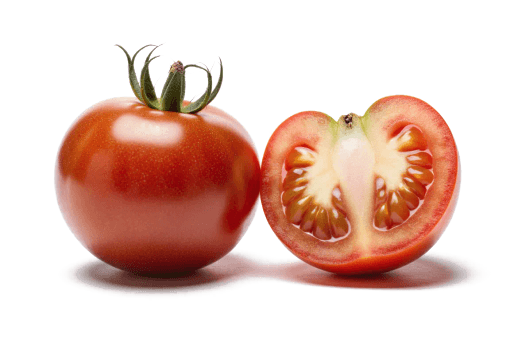
Tomato
Solanum lycopersicum
A green, herbaceous profile led by fresh-cut-leaf notes, underpinned by a sweet, fruity base with delicate, almost violet-like floral nuances.
Aroma compounds
The volatile molecules behind its aroma. Each one adds a distinct note.
- (Z)-3-hexenal intensely green, fresh-cut leaf and grass; the signature note of fresh tomato
- beta-Ionone floral and sweet, violet-like with a woody undertone; very potent even in trace amounts
- Hexanal green and grassy, with a fruity green-apple edge
- 2-isobutylthiazole earthy and vegetal, like tomato vine and leaf; a highly characteristic trait
- 6-methyl-5-hepten-2-one fruity and citrusy, sweet and slightly floral (derived from lycopene)
In the kitchen
The base of sauces, sofritos and stews, and the raw star of salads, gazpachos and bruschettas. Roasted, confit or dried it concentrates its sweetness and umami character; as paste or concentrate it is a background seasoning. In Chilean cooking it is the heart of Chilean salad (peeled, in wedges, with thin onion strips), of pebre and of chancho en piedra, and stuffed it is a summer classic. Salt it when serving, not before: salt draws out its juice.
- Basil
- Garlic
- Olive oil
- Mozzarella
- Onion
- Oregano
How to choose, store and substitute it
How to choose it
Choose tomatoes that are heavy for their size, evenly and deeply coloured, with taut skin and no cracks or soft spots. Smell the stem end: a ripe tomato smells of tomato and vine. For salads, firm but slightly yielding; for sauce, fully ripe and even a little soft. Long-life varieties last longer but have less aroma.
How to store it
Do not refrigerate them: cold below about 12 °C dulls their aroma and turns the flesh mealy. Leave them at room temperature, stem side down and away from the sun, for 3 to 5 days. If they are very ripe and you will not use them, refrigerate them for 1 or 2 days and take them out 30 minutes before using. Cut, they are covered and eaten within 1 or 2 days. Raw, whole and frozen they last 6 months, only for cooking.
What to use instead
- Canned peeled tomatoes: a 400 g can equals about 4 medium tomatoes; better for sauces and stews out of season.
- Cherry tomatoes: the same amount by weight; sweeter with firm flesh, good for salads and roasting.
- Tomato paste or concentrate: 1 tablespoon dissolved in 1/4 cup of water gives the background flavour in stews and long sauces.
Frequently asked questions about tomato
How do you peel a tomato easily?
Score a shallow cross in the base, plunge it into boiling water for 30-60 seconds, until the skin splits at the edges, and move it to iced water. The skin slips off by hand. It is the step for Chilean salad: without skin, the tomato mixes better with the dressing and is more tender.
Why shouldn't tomatoes be kept in the fridge?
Cold damages the enzymes that produce their aroma and breaks the structure of the flesh, which turns mealy and flavourless, an effect that is not reversed when you take it out. Refrigerating is only justified for a very ripe tomato you will not use within a day or two, and it must return to room temperature before eating.
How do I ripen green or hard tomatoes?
Leave them at room temperature, out of direct sun, in a paper bag with a ripe apple or banana: these fruits release ethylene, the gas that speeds ripening. They take 2 to 4 days. Do not put them in the fridge or in closed plastic bags, which trap moisture and rot them.
How do I fix an acidic tomato sauce?
Cook it longer over low heat with the pot uncovered so it reduces and concentrates; add a grated carrot or a pinch of sugar, which round out the acidity without obvious sweetness. A good ripe tomato, peeled and seeded, gives a gentler sauce from the start.
Recipes with tomato
- Shrimp Ceviche — Fresh Lime, Red Onion and Cilantro
- Chancho en piedra — Chile's stone-ground tomato, garlic and chili salsa
- Chilean choripán — grilled longaniza sausage in a marraqueta roll with pebre
- Completo italiano (Chilean hot dog with avocado, tomato & mayo)
- Chilean Salad (Ensalada Chilena) — Tomato and Onion Salad
- Cracking lentil & tuna salad with crunchy veg
- Chilean pebre (fresh tomato, onion & cilantro salsa)
- Homemade Tomato Sauce for Pasta