Spice
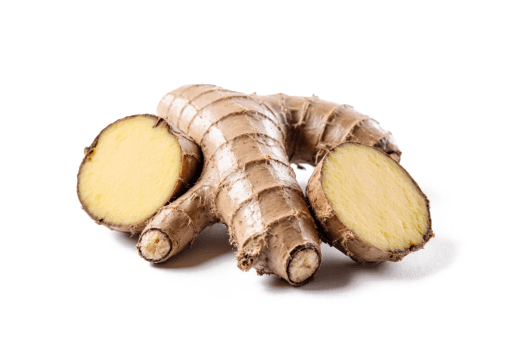
Ginger
Zingiber officinale
A warm, penetrating aroma that pairs a woody, earthy base with a bright citrus lift and a fresh, tingling heat.
Aroma compounds
The volatile molecules behind its aroma. Each one adds a distinct note.
- Zingiberene warm, woody and spicy; the aromatic signature of ginger
- Citral (geranial + neral) fresh and lemony, giving fresh ginger its citrus brightness
- 6-Gingerol pungent and hot; responsible for the bite of fresh ginger
- 6-Shogaol intense, sharp heat that develops when ginger is dried or cooked
- β-Sesquiphellandrene woody and spicy, with a herbal, balsamic edge
In the kitchen
It is used grated, sliced or ground in sofritos, curries, broths, marinades and stews, and it flavours infusions, gingerbread, cookies and drinks such as ginger ale. Its heat softens when cooked fresh and becomes more penetrating when dry. In Chilean baking it spices pan de pascua; fresh, it adds a clean, citrusy heat to pork and chicken marinades, dressings and broths. Grated very finely it blends in better than in slices.
- Garlic
- Lemon
- Honey
- Soy sauce
- Scallion
- Chocolate
How to choose, store and substitute it
How to choose it
Choose firm, heavy, plump pieces with thin, taut, smooth, glossy skin, without wrinkles, soft spots or mould. Breaking off a tip should snap and release an intense, citrusy aroma. Young ginger, with pale, almost translucent skin, is juicier and milder; mature ginger, with darker skin, is spicier and more fibrous.
How to store it
Whole and unpeeled, in a paper bag in the vegetable drawer of the fridge, it keeps 2 to 3 weeks. Frozen whole it lasts about 6 months and can be grated straight from the freezer, without peeling or thawing. Ground ginger, in an airtight jar away from light, keeps its flavour for 1 to 2 years.
What to use instead
- Ground ginger: 1/4 teaspoon for each tablespoon of freshly grated ginger; it works in doughs and spice mixes, not in fresh sauces.
- Galangal: a similar flavour, more resinous and citrusy; the same amount in broths and soups.
- A touch of lemon zest with a pinch of pepper: it mimics the fresh heat in dressings when there is no ginger.
Frequently asked questions about ginger
Do I need to peel ginger?
If the skin is thin and young, washing it well is enough. If it is thick or wrinkled, peel it by scraping with the edge of a teaspoon: it follows the curves of the root better than a knife and wastes no flesh. For infusions and broths you do not need to peel it, only wash it.
How much grated ginger does a piece yield?
A piece of about 2.5 cm grated yields close to 1 tablespoon. For a marinade for 500 g of meat, 1-2 tablespoons are enough; for an infusion, 3 or 4 thin slices per cup. It grates best on a fine grater, and if it is very fibrous, press out the juice with a garlic press.
Fresh or ground? Are they interchangeable?
Not entirely. Fresh is juicy, citrusy and hot; dried is warmer, earthier and more concentrated. In doughs, cookies and spiced breads the ground version goes in (as in pan de pascua); in stir-fries, marinades, dressings and infusions, the fresh one. If you must swap, use 1/4 teaspoon of ground for each tablespoon of fresh.
How do I make a ginger infusion?
Put 3 or 4 thin slices (about 10 g) in 250 ml of water, simmer over low heat for 10 minutes with the pot covered and strain. Serve it plain or with lemon and honey: add the lemon once the infusion is lukewarm, so it does not lose aroma or turn bitter.