Herb
Basil
Ocimum basilicum
Fresh, herbaceous aroma with a sweet anise backbone and floral, faintly clove-like spicy accents.
Aroma compounds
The volatile molecules behind its aroma. Each one adds a distinct note.
- Linalool floral and fresh, with a light citrus touch
- Estragole (methyl chavicol) sweet and anise-like, reminiscent of licorice
- Eugenol warm and spicy, clove-like
- Eucalyptol (1,8-cineole) fresh and camphoraceous, eucalyptus-like
- Methyl cinnamate balsamic and sweet, with a fruity strawberry note
In the kitchen
It is the base of Genoese pesto and is added fresh at the end of cooking to preserve its aroma in tomato sauces, caprese salad, pizzas and pasta dishes. It also perfumes oils, salads and some fruit desserts. In Chile it is the star of humitas and of the corn filling in pastel de choclo, where it is blended with the corn. Dried it suits stews and long sauces, but it loses almost all its freshness.
- Tomato
- Mozzarella
- Garlic
- Olive oil
- Pine nuts
- Lemon
How to choose, store and substitute it
How to choose it
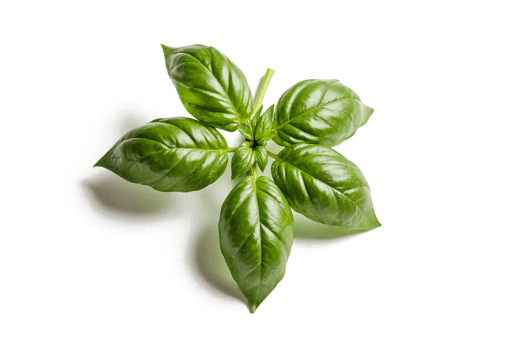
Look for deep, glossy green leaves that are firm and free of black spots or yellowing, with a strong aroma when you rub a leaf between your fingers. Potted basil, with roots, lasts longer than a cut bunch. Reject limp, slimy or dark-stemmed sprigs: they blacken within hours.
How to store it
Do not put it in the fridge: cold below about 10 °C darkens the leaves. Treat it like a bunch of flowers: stems in a glass of water at room temperature, away from direct sun and with a loose bag over the top; it lasts up to 1 week if you change the water every 2 days. To freeze it, chop it with olive oil and fill an ice-cube tray: it keeps for 3 months.
What to use instead
- Dried basil: 1 teaspoon for each tablespoon of fresh, added at the start of cooking.
- Fresh oregano: half the amount; it is stronger and works in tomato sauces and pizzas.
- Parsley with a few mint leaves: for fresh salads and dressings, without basil's anise note.
Frequently asked questions about basil
When do I add basil: at the start or at the end?
Fresh, at the end or off the heat, because its aroma is volatile and is lost with long cooking. Dried, on the contrary, goes in at the beginning of a sauce or stew so it rehydrates and releases its flavour.
Why does basil turn black?
It darkens in the cold of the fridge and when it is bruised while being cut. Keep it out of the fridge, cut it with a very sharp knife or tear it by hand just before using it, and do not dress it ahead of time: the acid in lemon or vinegar also darkens it.
Can I freeze basil?
Yes, although it loses texture and is only good for cooking, not for salads. Chop it with olive oil and freeze the mix in an ice-cube tray, or blanch the leaves for 10 seconds, cool them in iced water, dry them and freeze them in a thin layer. It keeps about 3 months. Pesto also freezes, better without the cheese, which goes in when it thaws.
What does it do in humitas?
In Chilean humitas, fresh basil is ground together with the corn, and that paste is cooked for a few minutes with sautéed onion before it is wrapped in the husk and boiled. It gives humitas their characteristic aroma, which is why fresh basil is best: dried basil does not give the same fragrance.