Aromatic vegetable
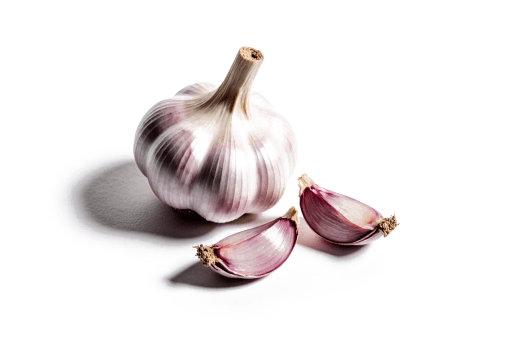
Garlic
Allium sativum
A sharp, sulfurous punch when raw, with a spicy, almost metallic bite that mellows on cooking into sweet, toasty, deeply savory warmth.
Aroma compounds
The volatile molecules behind its aroma. Each one adds a distinct note.
- Allicin the signature scent of freshly crushed garlic; pungent, hot and piercing
- Diallyl disulfide sulfurous and strongly garlicky; the dominant note of cooked garlic
- Diallyl trisulfide intense, savory, sulfurous garlic; a key driver of roasted-garlic aroma
- Allyl methyl sulfide lingering, slightly sweetish garlic; responsible for garlic breath
- 2-vinyl-4H-1,3-dithiin pungent and sulfurous; forms as crushed garlic sits, e.g. in oil
In the kitchen
The aromatic base of countless dishes: raw, chopped or crushed, it adds bite to dressings, marinades and sauces such as chancho en piedra; sautéed or roasted it turns sweet and works as the foundation of sofritos, stews, meats and pasta sauces. Intensity depends on the cut and the heat: crushed and raw is the sharpest (chancho en piedra, dressings, aioli); sliced and gently golden it perfumes the oil; whole and roasted in its skin it turns creamy and sweet, ready to spread. In a sofrito it goes in last, because burnt garlic turns bitter.
- Olive oil
- Tomato
- Parsley
- Lemon
- Chili
- Meat and seafood
How to choose, store and substitute it
How to choose it
Pick firm heads that feel heavy for their size, with dry, tight skin free of marks or mould, and cloves that do not give when pressed. Avoid heads with green sprouts, which taste more bitter, and light, hollow-feeling ones, a sign they have dried out. Seasonal new garlic has moister skin and a milder flavour: use it within a few days.
How to store it
Keep whole heads in a cool, dry, dark, ventilated place, not in a plastic bag: they last 3 to 6 months. Do not refrigerate whole heads, because moisture encourages mould and sprouting. Loose cloves keep 1 or 2 weeks; peeled, in a jar in the fridge, up to 1 week. Garlic in oil must always be refrigerated and used within 3 or 4 days: at room temperature it can develop the bacteria that cause botulism.
What to use instead
- Garlic powder: 1/8 teaspoon per clove; it lacks the bite of raw garlic, so it works best in stews and marinades.
- Jarred crushed garlic or paste: 1/2 teaspoon per clove.
- Chopped chives: a mild, fresh aroma for salads and raw sauces when there is no garlic.
Frequently asked questions about garlic
How do I peel garlic quickly?
Crush the clove with the flat side of a knife and the skin slips off. For a whole head, separate the cloves, put them in a jar with a lid and shake hard for 20 seconds, or soak them in warm water for 5 minutes. If you are going to crush it, the loose skin comes off with the first blow.
How much is a clove and how much is a head?
A medium clove weighs 3-5 g and gives about 1 teaspoon of chopped garlic; a head has between 8 and 12 cloves. If a recipe calls for a head of roasted garlic, it means all the cloves in their skins; if it calls for a clove, it means just one.
Why does garlic turn bitter or blue-green?
It turns bitter when it burns in the pan: brown it only until pale golden, over medium-low heat, or add it after the onion. It can look blue-green when mixed with acid (lemon, vinegar) or cooked: it is a harmless reaction of its sulphur compounds and does not change the taste.
How is raw garlic used in chancho en piedra?
It is crushed first with coarse salt and chili in the mortar until it forms a paste, and only then is the tomato ground in: the salt helps break the garlic down. Because it is raw, use little (three cloves for four large tomatoes) and let the sauce rest for 10 minutes before serving so the bite blends with the rest.
Recipes with garlic
- Creamed Swiss Chard (Acelgas a la Crema)
- Salad Dressing — Classic Vinaigrette and 5 Easy Variations
- Aji de Gallina — Creamy Peruvian Shredded Chicken Stew
- Chilean Ajiaco — the leftover-steak soup eaten after Independence Day
- Anticuchos (Chilean grilled marinated beef skewers)
- Arrollado Huaso — Chilean Marinated Pork Roll
- Garlic shrimp (camarones al ajillo) — ready in 20 minutes
- Chilean cazuela de vacuno — clear beef broth with potato, pumpkin and corn
- Chancho en piedra — Chile's stone-ground tomato, garlic and chili salsa
- Juicy Pan-Seared Pork Chops (with oven and sauce variations)
- Juicy roast turkey — dry brine, herb butter and a thermometer
- Juicy Pan-Seared Chicken Breasts in 20 Minutes
- Juicy oven-roasted chicken pieces (crispy skin)
- Lovely lemon chicken traybake
- Pollo Arvejado (Chilean Chicken and Pea Stew)
- Porotos con rienda — the Chilean bean, pumpkin and spaghetti stew
- Mushroom risotto
- Juicy Baked Salmon with Lemon and Butter
- Homemade Tomato Sauce for Pasta
- Chicken and Vegetable Stir-Fry for the Whole Week
- Al pastor tacos